
Help us make change.
burn, scar sits at the heart of many of today’s pressing issues. Whether you’re concerned about climate resiliency and disaster recovery in rural communities or the stewardship of our public lands, we hope you’ll join us in taking action.
Stand Up for Rural Communities.
1. Donate to support community orgs in New Mexico and the film’s ongoing impact work.
We are proud to partner with Neighbors Helping Neighbors in Las Vegas, New Mexico. Since 2022, Neighbors Helping Neighbors has been providing mental health support and direct recovery services to fire survivors. After metal contaminants were found in the groundwater across the burn scar, NHN is now seeking funds to provide homeowners with ongoing well water testing and reverse osmosis systems to protect drinking water for local families.
Please consider donating to help local recovery in northern New Mexico and to support the film team in bringing this important conversation to communities across the country.
2. Advocate for more resiliency and recovery resources to rural communities, not fewer.
The Trump Administration’s May 2026 FEMA proposal suggests several agency reforms that could have drastic impacts on communities like those featured intimately in our film. By increasing the threshold for disaster declarations, many rural areas (with less concentrated infrastructure) will likely fail to qualify for critical federal aid.
Tell your representatives not to support cuts to FEMA– we need to provide more support and less red tape for communities, not the other way around.
3. Keep attention after the disaster’s “done.”
As many folks know all too well, disaster recovery is a long road. But after the camera crews pack up and the headlines fade, many families are left to face those years of rebuilding far from the public eye.
We can do better. If there’s been a fire, flood, tornado, hurricane, or other natural disaster in your state, encourage your local press to continue covering it one year, two years, and five years down the line. Write letters to the editor. Share the stories you hear. Help keep their experiences front and center for the public and for policy makers.
fight for the u.S. forest service.
In 2025, forest treatments intended to help prevent devastating wildfires (prescribed fire & thinning) were down nearly 40%. In 2026, after record low snowpacks across the west, the country is well above the 10-year average for wildfire acres burned and the season is just getting started.
Now a major restructure of the Forest Service threatens to close over 50 research stations and divert focus away from critical fire prevention work.
1. Contact brands and ask them to stand up for the Forest Service.
Join the campaign to pressure outdoor brands that have built their businesses around public land access to speak out.
2. Tell your reps not to support the restructure.
35 Senators have so far raised concerns about the direction the Forest Service is headed. If yours isn’t on the list, reach out and ask them why.
Engage in the dialogue around fire.
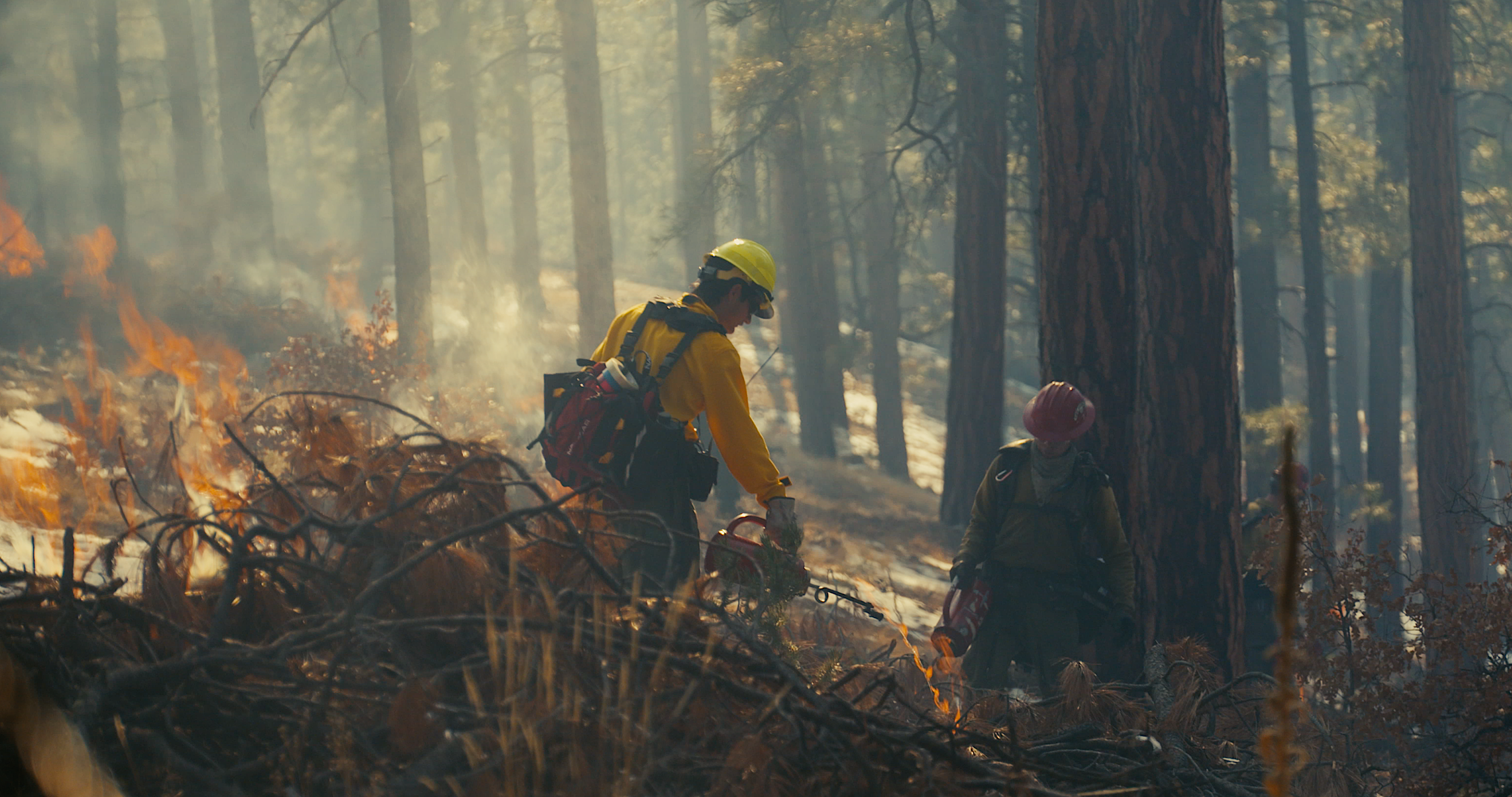
Fire can be devastating– but it’s also a necessary and inescapable force on the landscape. We need to adapt.
1. Learn more about “good fire.”
Some resources we love (and we want to hear about your favorites):
Indigenous Fire Ecology (Ologies Podcast)
Ignition (Book by M.R. O’Connor)
Restoring Forest Health through Cultural Burning (PBS Video)
2. See what’s happening in your back yard.
Attend your local Forest Service or BLM public meeting about forest management plans
Stay in the know about nearby fires with Watch Duty
Learn about your county’s wildfire resilience level
3. Tell your own fire stories / make your own fire art.
The last century of fire suppression has created forests that are critically unhealthy: as beloved as Smokey the Bear is, we desperately need new, nuanced, and dynamic expressions of fire in the mainstream.
Tag us @burnscar_film with your fire vision!
Join the Conversation.
This film is an invitation. When it comes to managing public lands in a way that prioritizes both a scientific and justice-focused approach, there are no simple solutions. But we believe this story can help spark dialogue, and we’d love for you to be a part of that.
If you are connected to a land-based organization, educational institution, policy body, or even just your local book club and you’d like to talk to us about hosting a screening of the film, we want to hear from you.